PV PI JANUARY ORDER STOCK!
There is limited left-over stock from our first manufacturing run now available.
We will be staggering the release of stock to make it available to more customers.
NOTE: IF YOU ARE IMPORTING FROM A COUNTRY OUTSIDE OF AUSTRALIA YOU MAY BE SUBJECT TO ADDITIONAL IMPORT TAXES, DUTIES OR TARIFFS UPON IMPORT.
What is the PV PI?
The PV Pi or the PhotoVoltaic Pi is the first Raspberry Pi HAT that can provide power from a high-capacity 12V LiFePO4 battery while also charging that battery from a large solar panel. The PV Pi with its onboard microcontroller also enables a range of smart features to support off-grid operation of your Raspberry Pi in remote locations.
Installation is simple. Simply attach your PV Pi on top of your Raspberry Pi with the included standoffs and headers. Connect your battery and solar panel to the included XT30 connectors and plug them into the PV Pi.
Key Features
The PV Pi supports charging of a 12V LiFePO4 battery at up to 10 amps of battery charging and supports a wide range of solar panel types with input voltages from 12V all the way up to 50V VOC (voltage open circuit). The PV Pi charges the battery from the solar panel with true maximum power point tracking (MPPT) to enable efficient solar charging.
The PV Pi also has a Real Time Clock (RTC) for time keeping and setting a wake-up alarm. You can also configure a power watchdog which will power cycle your device if it becomes unresponsive. This can all be configured through the PV Pi manager software as well as low battery shutdown and rebooting when the battery has become sufficiently recharged.
Compatible Devices
The PV Pi is compatible with all Raspberry Pi types using the 40 pin header. It provides power via the 5 volt pins and ground, and communication over UART on pins 14 and 15.
It is therefore also compatible with a variety of Raspberry Pi clones and other single board computers including old versions of the NVIDIA Jetson Nano boards. It is important to consult the user manual for your specific single board computer to determine whether it is compatible with the PV Pi.
What’s in the Box?
Each PV Pi includes an accessory kit designed for secure mounting to your device.
This includes
1x 40-pin Stackable Header (Extra-long, male-to-female)
4x 16mm Brass Standoffs (Female-to-male)
4x 6mm Brass Standoffs (Female-to-female)
4x 2.5mm Screws
For easy setup we've also included one male and one female XT30 30cm long cables for connecting your battery and solar panel.
Software
Every PV Pi comes pre-flashed with the PV Pi firmware. To communicate with the PV Pi from your Raspberry Pi or other SBC to configure the PV Pi and set-up scheduling we have created the PV Pi Manager. This is an open source repo that makes all of the functionality of the PV Pi easy to use!
Support
PV Pi User Manual
PV Pi Quick-Start Guide
PV Pi Manager Software
PV Pi Tutorial Videos
IMPORTANT SAFETY INFORMATION & DISCLAIMER
Read carefully before purchase or installation.
1. Professional Use Only The PV Pi is an engineering component designed for integration into custom projects. It is not a standalone consumer electronic device. This product is intended for use only by experienced users with a firm understanding of electrical safety, DC power systems, and Raspberry Pi hardware.
2. High-Current & Battery Risks The PV Pi manages high-capacity 12V LiFePO4 batteries and solar inputs. Improper usage—including, but not limited to, incorrect wiring, reversed polarity, lack of appropriate fusing or using incompatible battery chemistries—carries a significant risk of fire, explosion, property damage, and serious personal injury.
3. Installation Requirements
Polarity: Double-check all XT30 connections. Reverse polarity may cause immediate and permanent damage to the PV Pi and the connected Raspberry Pi.
Ratings: Do not exceed the absolute maximum voltage rating of 50V (VOC) for solar panels.
4. Limitation of Liability By purchasing or using this device, you acknowledge that the manufacturer and distributors of the PV Pi are not liable for any direct, indirect, or consequential damages resulting from the use, misuse, or failure of the product. The user assumes all responsibility for the safe integration and operation of the PV Pi within their specific application.
PV PI JANUARY ORDER STOCK!
There is limited left-over stock from our first manufacturing run now available.
We will be staggering the release of stock to make it available to more customers.
NOTE: IF YOU ARE IMPORTING FROM A COUNTRY OUTSIDE OF AUSTRALIA YOU MAY BE SUBJECT TO ADDITIONAL IMPORT TAXES, DUTIES OR TARIFFS UPON IMPORT.
What is the PV PI?
The PV Pi or the PhotoVoltaic Pi is the first Raspberry Pi HAT that can provide power from a high-capacity 12V LiFePO4 battery while also charging that battery from a large solar panel. The PV Pi with its onboard microcontroller also enables a range of smart features to support off-grid operation of your Raspberry Pi in remote locations.
Installation is simple. Simply attach your PV Pi on top of your Raspberry Pi with the included standoffs and headers. Connect your battery and solar panel to the included XT30 connectors and plug them into the PV Pi.
Key Features
The PV Pi supports charging of a 12V LiFePO4 battery at up to 10 amps of battery charging and supports a wide range of solar panel types with input voltages from 12V all the way up to 50V VOC (voltage open circuit). The PV Pi charges the battery from the solar panel with true maximum power point tracking (MPPT) to enable efficient solar charging.
The PV Pi also has a Real Time Clock (RTC) for time keeping and setting a wake-up alarm. You can also configure a power watchdog which will power cycle your device if it becomes unresponsive. This can all be configured through the PV Pi manager software as well as low battery shutdown and rebooting when the battery has become sufficiently recharged.
Compatible Devices
The PV Pi is compatible with all Raspberry Pi types using the 40 pin header. It provides power via the 5 volt pins and ground, and communication over UART on pins 14 and 15.
It is therefore also compatible with a variety of Raspberry Pi clones and other single board computers including old versions of the NVIDIA Jetson Nano boards. It is important to consult the user manual for your specific single board computer to determine whether it is compatible with the PV Pi.
What’s in the Box?
Each PV Pi includes an accessory kit designed for secure mounting to your device.
This includes
1x 40-pin Stackable Header (Extra-long, male-to-female)
4x 16mm Brass Standoffs (Female-to-male)
4x 6mm Brass Standoffs (Female-to-female)
4x 2.5mm Screws
For easy setup we've also included one male and one female XT30 30cm long cables for connecting your battery and solar panel.
Software
Every PV Pi comes pre-flashed with the PV Pi firmware. To communicate with the PV Pi from your Raspberry Pi or other SBC to configure the PV Pi and set-up scheduling we have created the PV Pi Manager. This is an open source repo that makes all of the functionality of the PV Pi easy to use!
Support
PV Pi User Manual
PV Pi Quick-Start Guide
PV Pi Manager Software
PV Pi Tutorial Videos
IMPORTANT SAFETY INFORMATION & DISCLAIMER
Read carefully before purchase or installation.
1. Professional Use Only The PV Pi is an engineering component designed for integration into custom projects. It is not a standalone consumer electronic device. This product is intended for use only by experienced users with a firm understanding of electrical safety, DC power systems, and Raspberry Pi hardware.
2. High-Current & Battery Risks The PV Pi manages high-capacity 12V LiFePO4 batteries and solar inputs. Improper usage—including, but not limited to, incorrect wiring, reversed polarity, lack of appropriate fusing or using incompatible battery chemistries—carries a significant risk of fire, explosion, property damage, and serious personal injury.
3. Installation Requirements
Polarity: Double-check all XT30 connections. Reverse polarity may cause immediate and permanent damage to the PV Pi and the connected Raspberry Pi.
Ratings: Do not exceed the absolute maximum voltage rating of 50V (VOC) for solar panels.
4. Limitation of Liability By purchasing or using this device, you acknowledge that the manufacturer and distributors of the PV Pi are not liable for any direct, indirect, or consequential damages resulting from the use, misuse, or failure of the product. The user assumes all responsibility for the safe integration and operation of the PV Pi within their specific application.
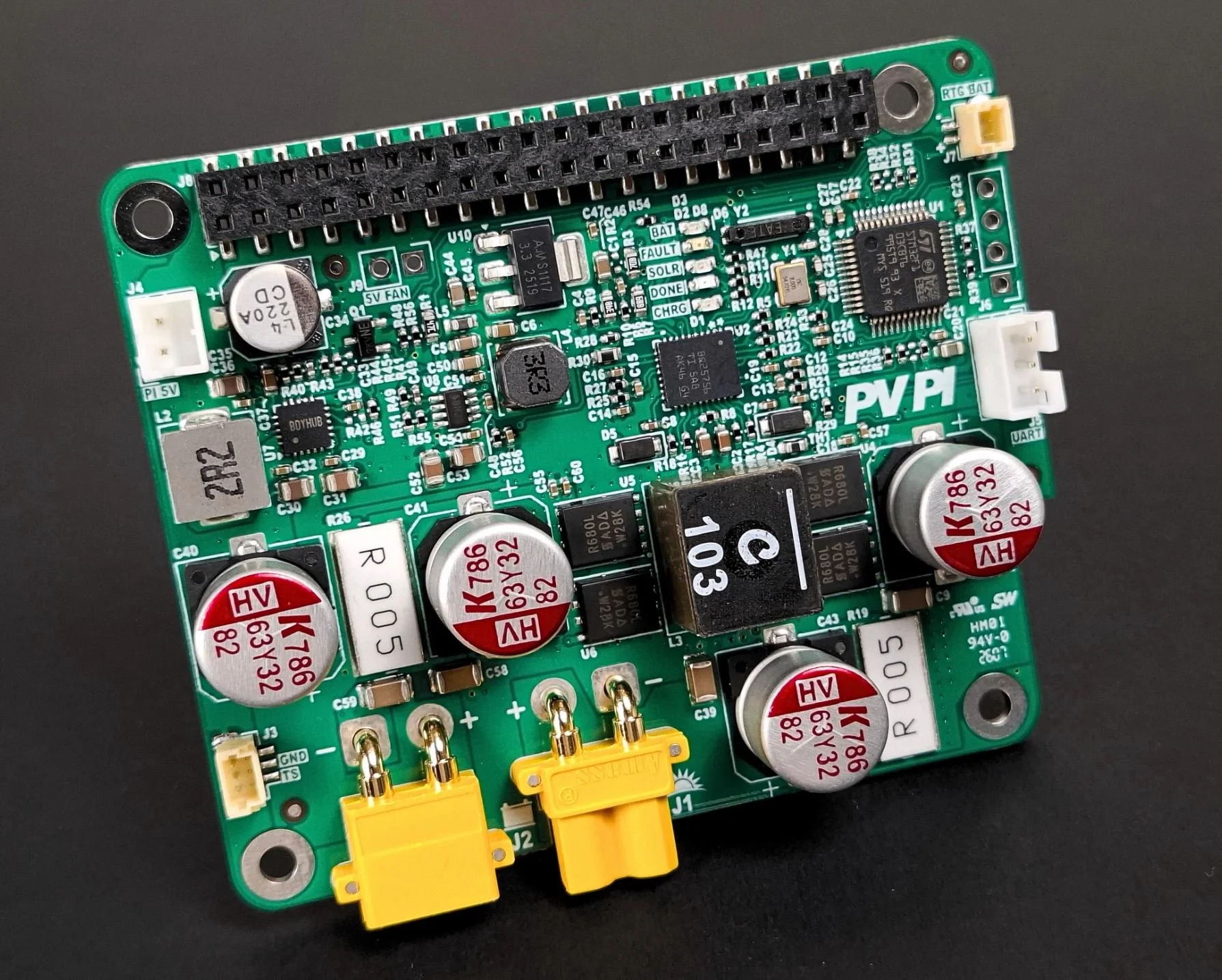 Image 1 of 7
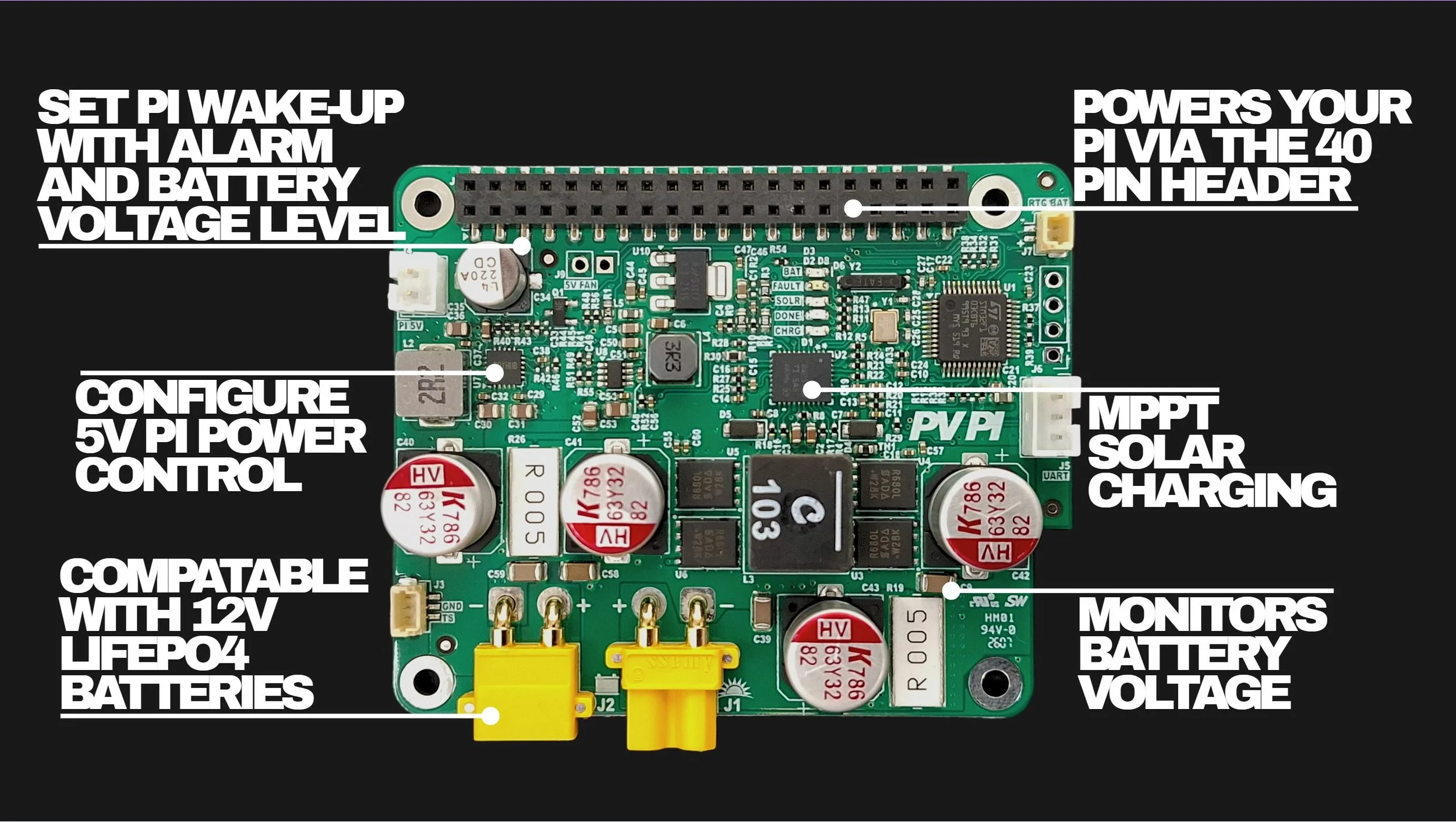 Image 2 of 7
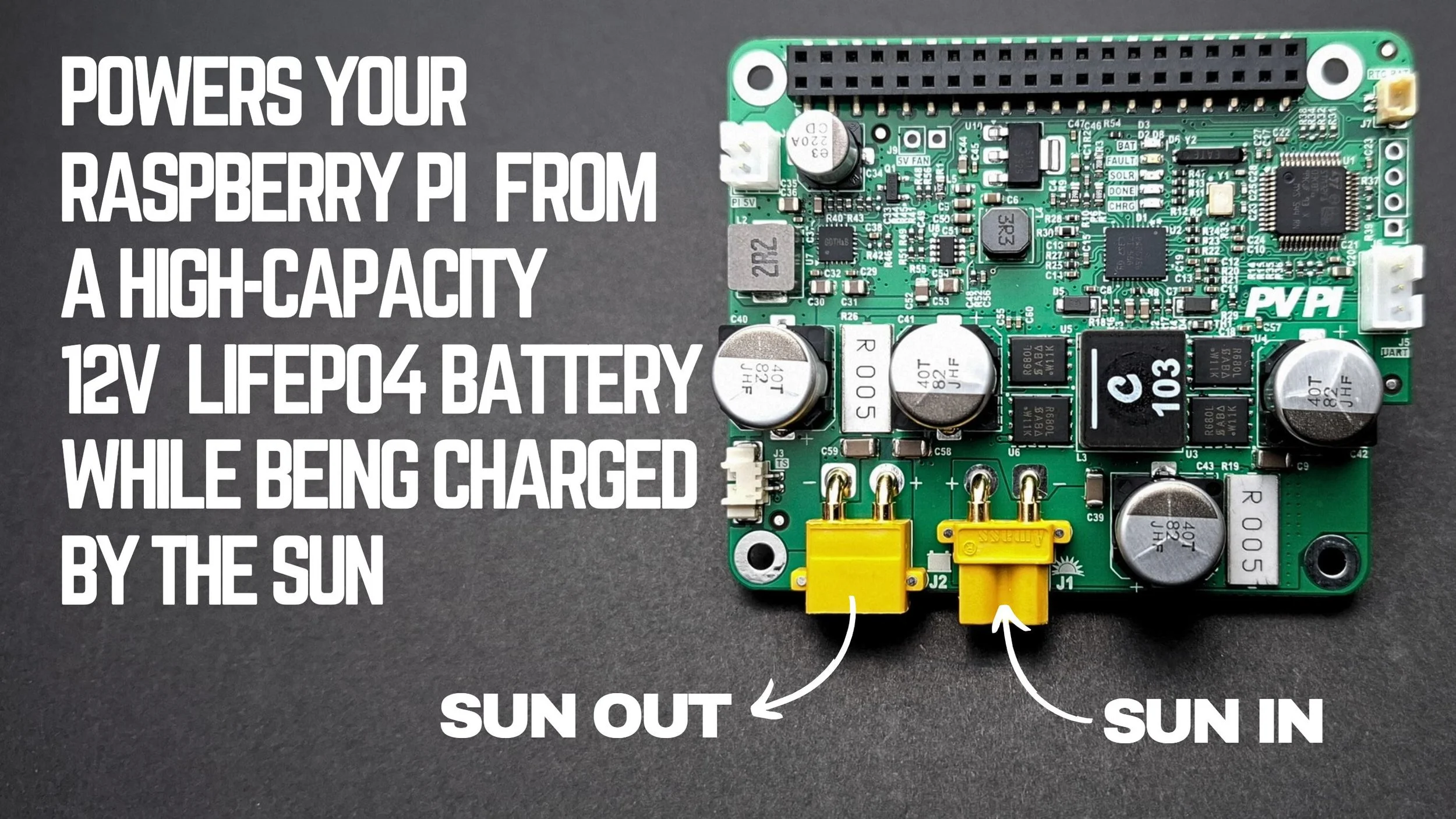 Image 3 of 7
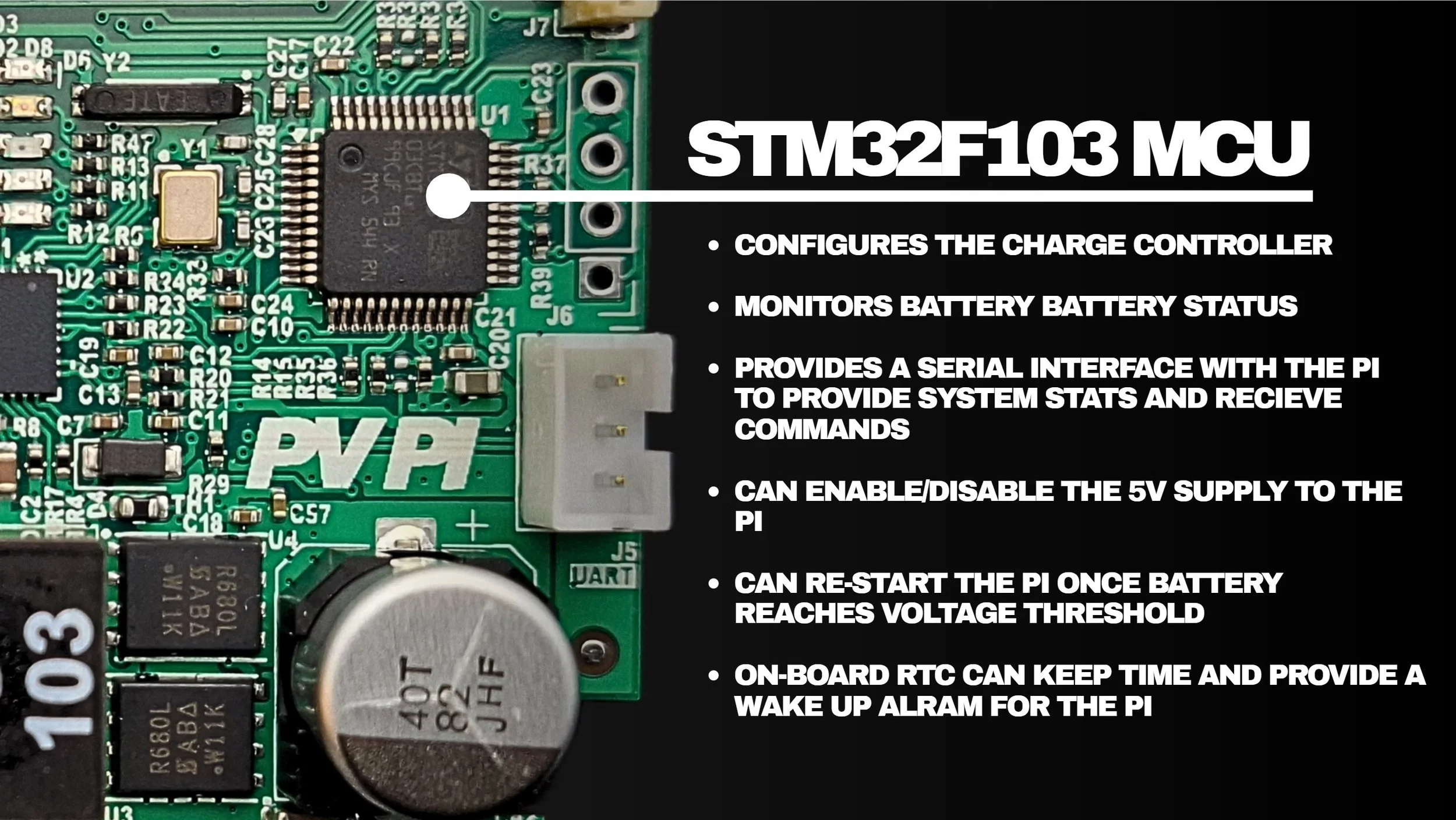 Image 4 of 7
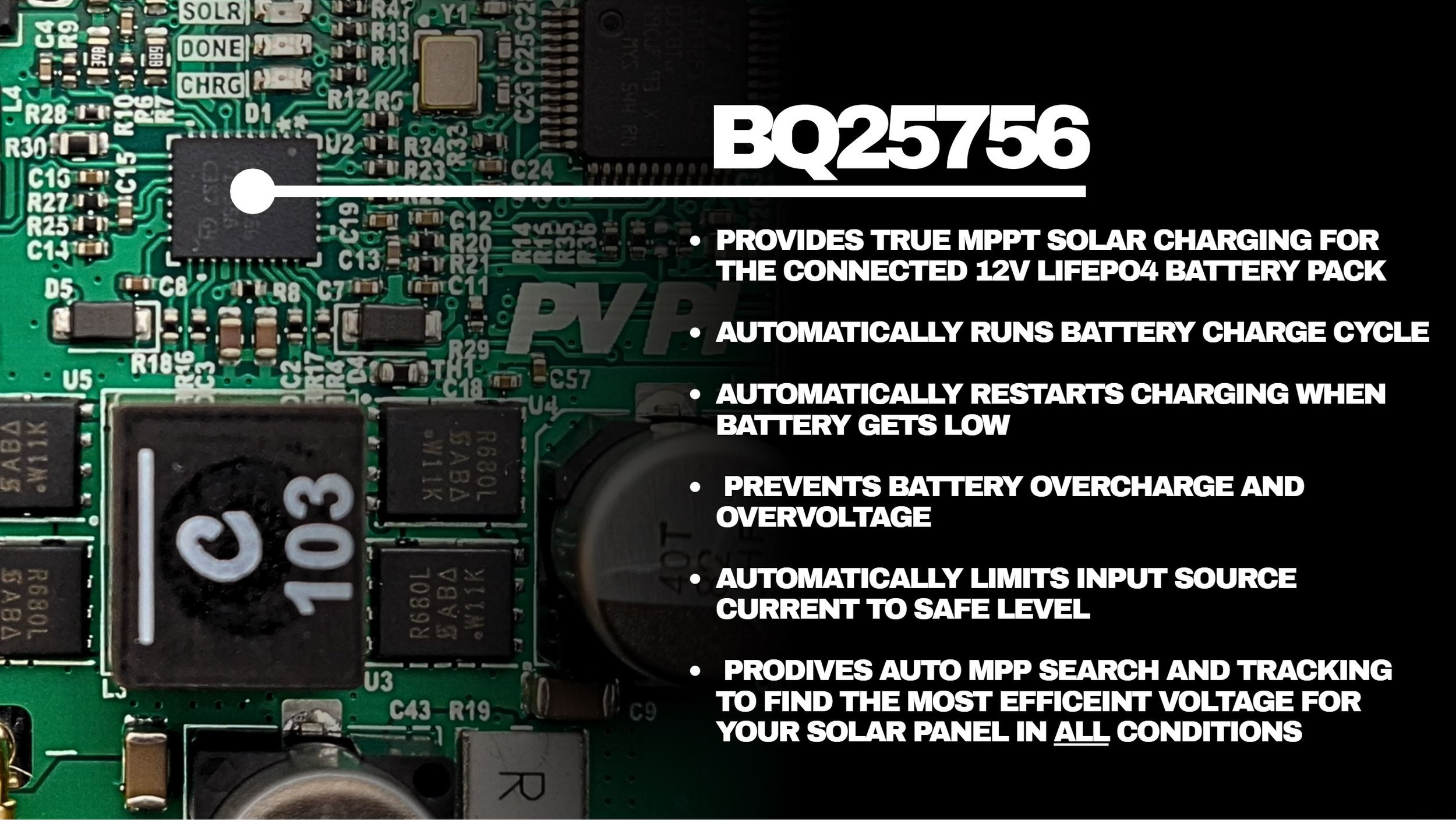 Image 5 of 7
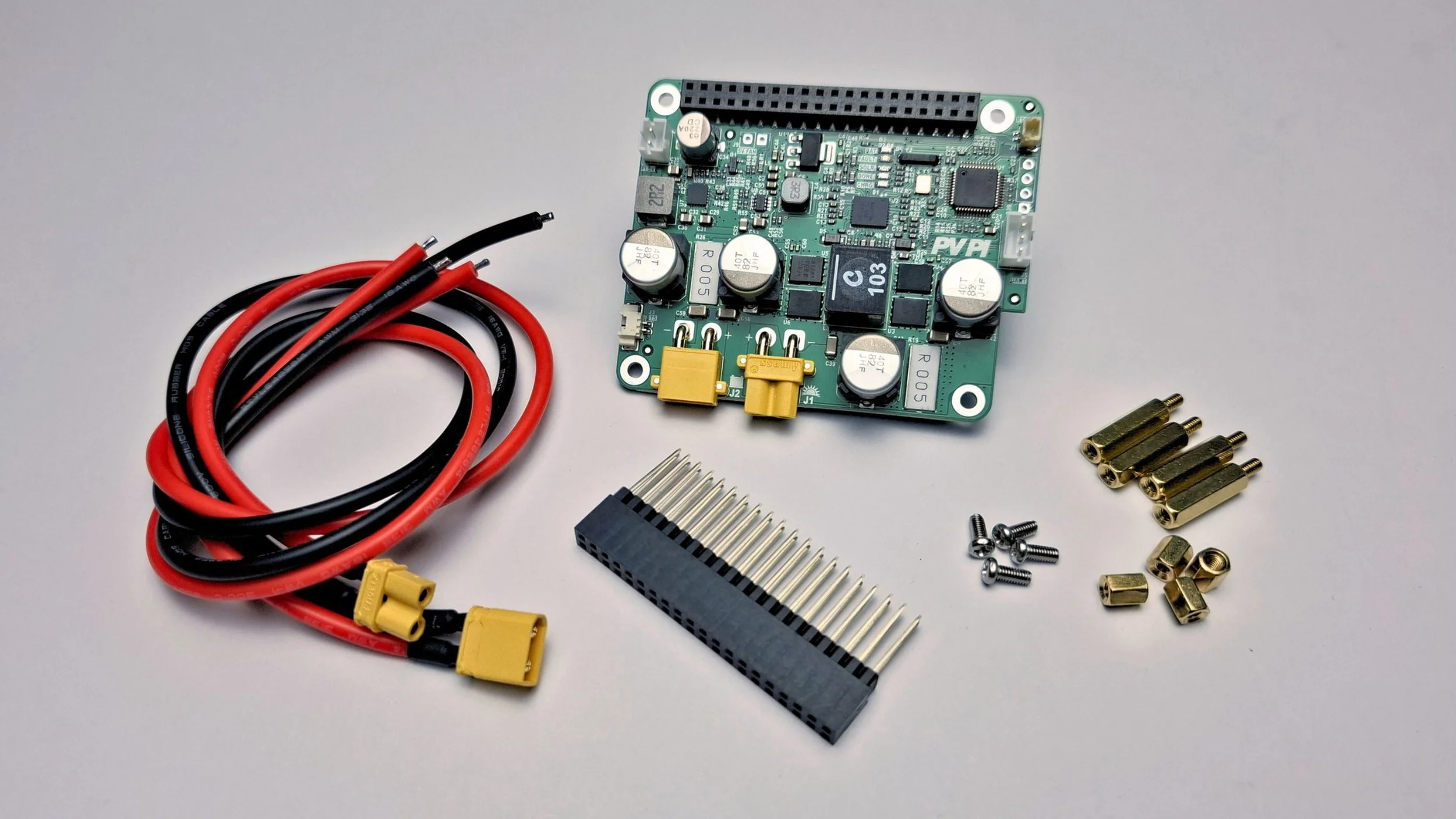 Image 6 of 7
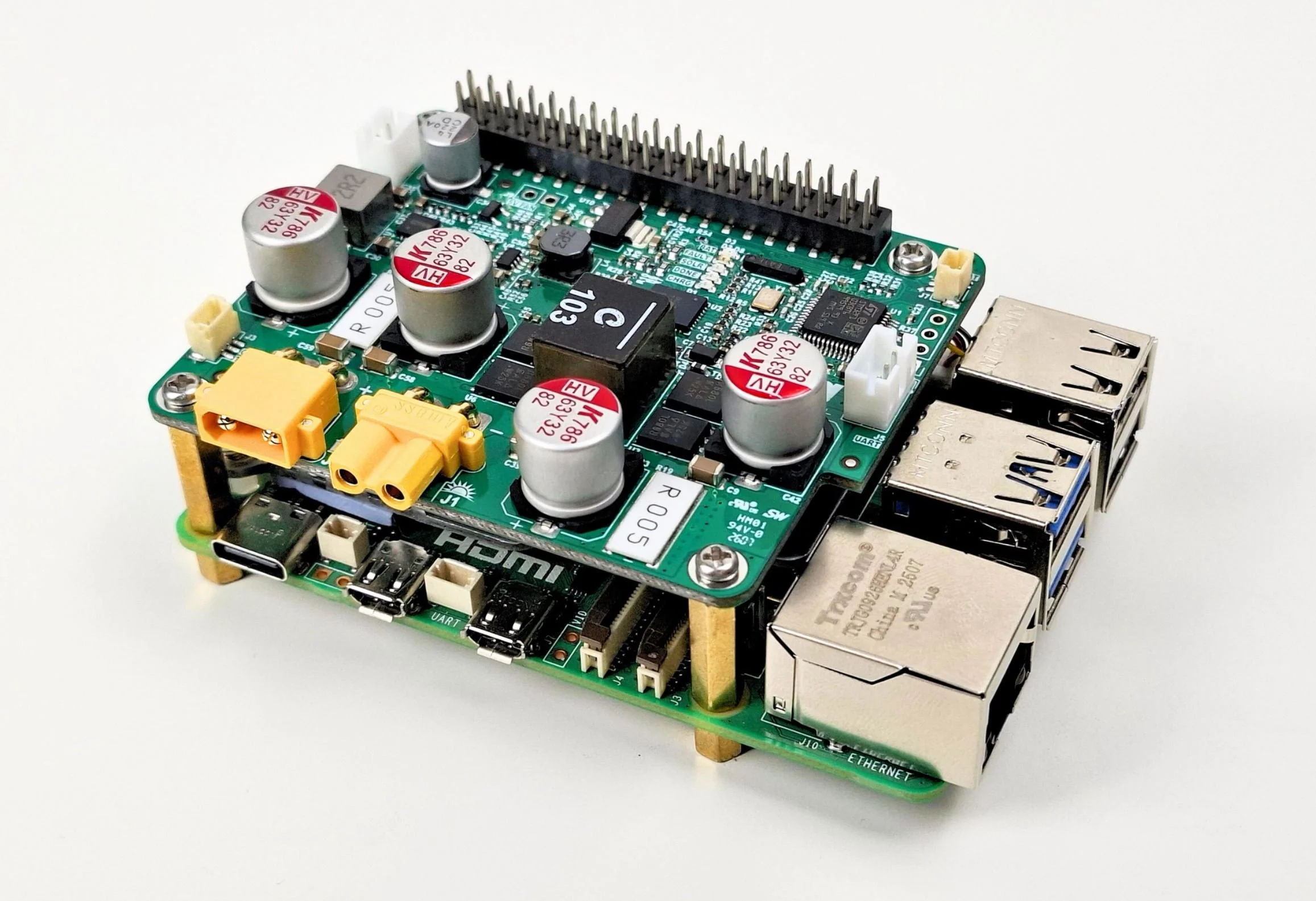 Image 7 of 7